
Tallshipchannel Ocean Observatory · Tall Ships · Ocean Science · Schools

Every voyage can be an ocean expedition. Let a classroom sail along.

The Tallshipchannel Ocean Observatory turns tall ships into floating observatories. Trainees record whales, plastic and sea temperature as they sail. European Blue Schools follow the ship live, ask the crew questions and work with the real data in class.

Built on Tallshipchannel's live AIS tracking of about 170 tall ships, contributing to the EU OceanEye initiative and the UN Ocean Decade.

LIVE · Christian Radich · 58°54′N 010°32′E · 7.4 kn

Why tall ships

Tall ships already sail where the ocean is least observed.

Sail training ships cross open water for weeks, slowly and quietly, with dozens of curious people on deck and on watch around the clock. That makes them ideal platforms for simple, repeatable observations: what swims past, what floats past, and how warm, salty and clear the water is.

Until now those observations stayed in a logbook. The Ocean Observatory gives them a position, a time and a destination: the classroom, the public and European ocean science.

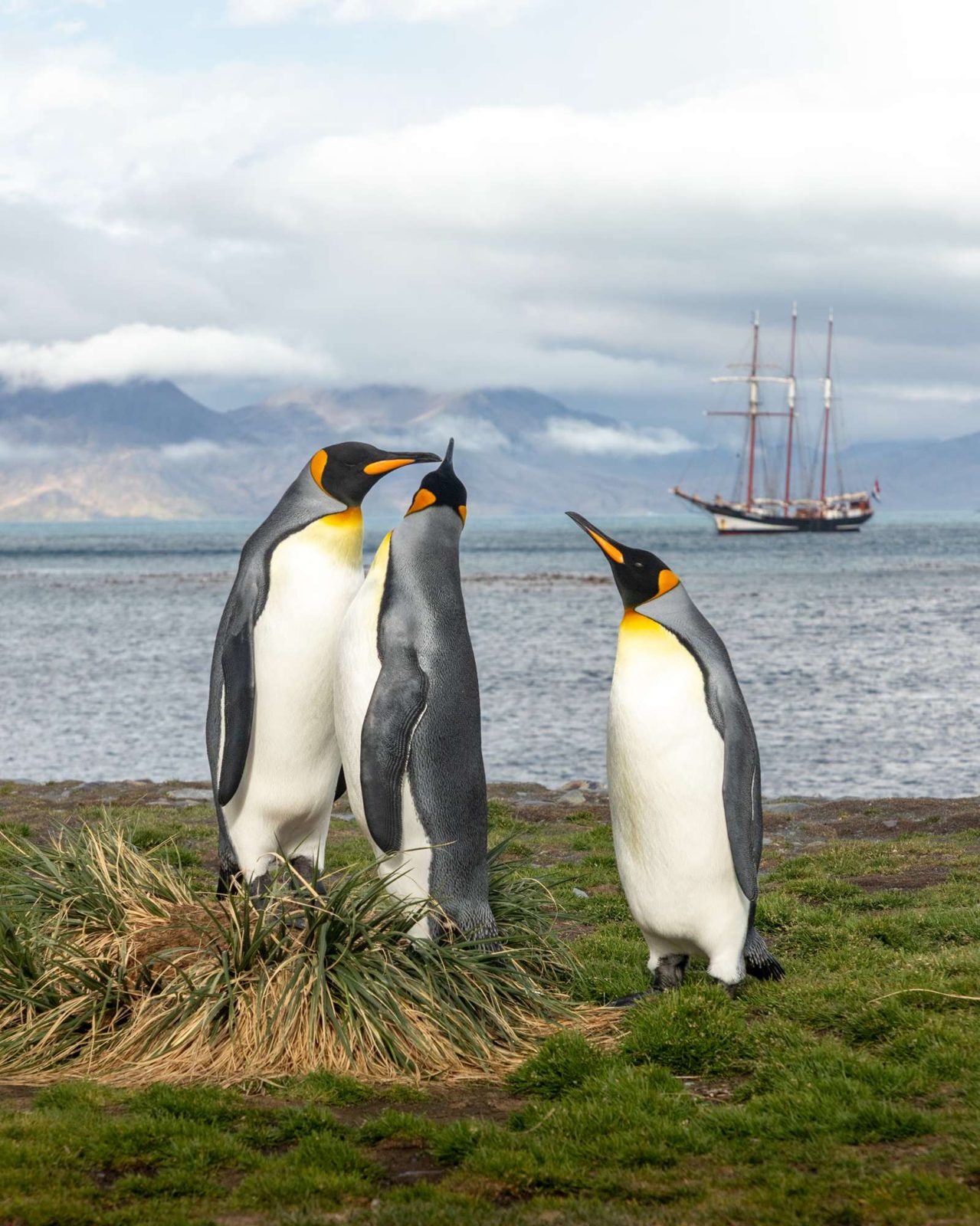
Three king penguins on the shore with a three-masted tall ship at anchor behind them
King penguins · tall ship at anchor© Josh Clarke
“A night watch that spots a whale is a science moment. It deserves more than a line in the logbook.”
~5%of the ocean has been thoroughly explored, according to the EU
~170tall ships followed live by Tallshipchannel AIS tracking
1,000+certified schools in the Network of European Blue Schools
2035OceanEye target year for EU leadership in ocean observation

The European context

OceanEye is the EU's plan to observe the ocean. The Ocean Observatory is how tall ships can contribute.

The European Commission adopted OceanEye in June 2026. It treats ocean observation as critical infrastructure and gives it an education and outreach mission alongside the science.

What OceanEye is

The EU initiative

  • Adopted as communication COM(2026) 268, part of the European Ocean Pact.
  • Aims for the EU to provide 35% of the global ocean observing system by 2035.
  • Launches an International Alliance with UNESCO-IOC to support GOOS, the Global Ocean Observing System.
  • Uses the European Digital Twin Ocean (EDITO) and open data to turn observations into forecasts and decisions.
  • Includes education, culture and ocean literacy through EU4Ocean and the Network of European Blue Schools.

What the Ocean Observatory adds

The Tallshipchannel module

  • Simple, standardised observation protocols trainees can follow on any watch.
  • Every observation automatically stamped with the ship's AIS position and UTC time.
  • Data prepared in open formats that EDITO and European marine data services can use.
  • A live bridge between ships and classrooms, so observation becomes ocean literacy.
  • Stories, photos and video from the voyage through Tallshipchannel Communities and the Media Vault.
United Nations Decade of Ocean Science for Sustainable Development 2021–2030

United Nations

Part of a global effort. OceanEye is closely aligned with the UN Decade of Ocean Science for Sustainable Development (2021–2030), led by UNESCO's Intergovernmental Oceanographic Commission. Its goal, "the science we need for the ocean we want", includes involving citizens and young people in ocean science. Observations from tall ships support that goal directly.

OceanEye features on board

Four things every watch can observe.

Each observation takes minutes, needs little equipment and is logged in the Tallshipchannel app on a phone or tablet. It is stored offline and synced when the ship has a connection.

A humpback whale raising its tail fluke above the sea
Humpback · 2 ind.logged 14:32 UTC

Wildlife sightings

Whales, dolphins, seabirds

Log species, number, behaviour and distance from the ship, with a photo. The app suggests likely species for the area, and marine biologists can confirm them later.

SPECIES · COUNT · BEHAVIOUR · BEARING · PHOTO
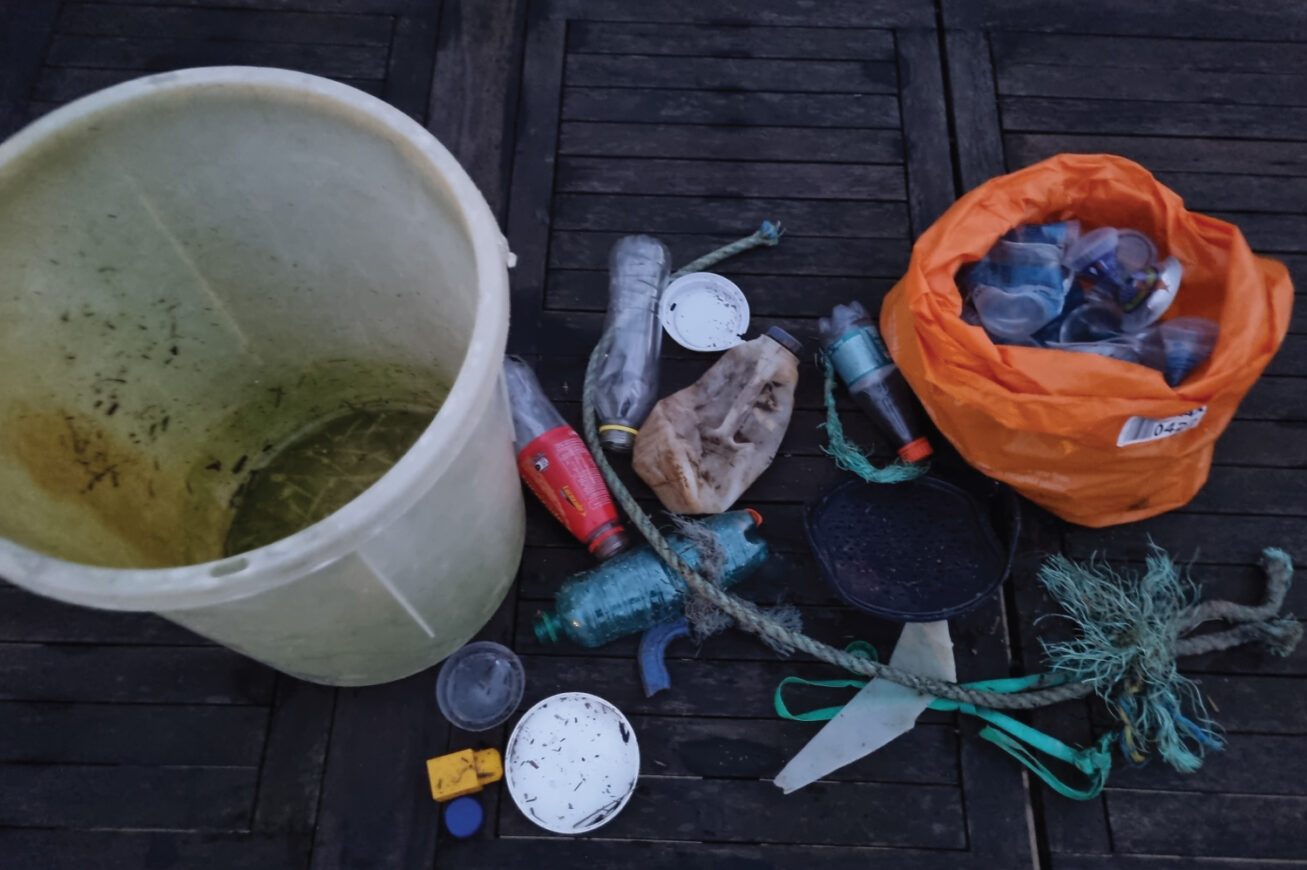
Plastic bottles, rope, a net and a bag of plastic cups collected from the sea and laid out on a ship's deck
Collected at sea · sorted on deck14 items

Plastic & marine litter

What floats past

Timed litter watches from the rail count floating items by type: bottles, bags, nets, rope, foam. Ships with a small manta trawl can take microplastic samples for partner labs.

TRANSECT START/END · ITEM TYPE · SIZE CLASS · COUNT

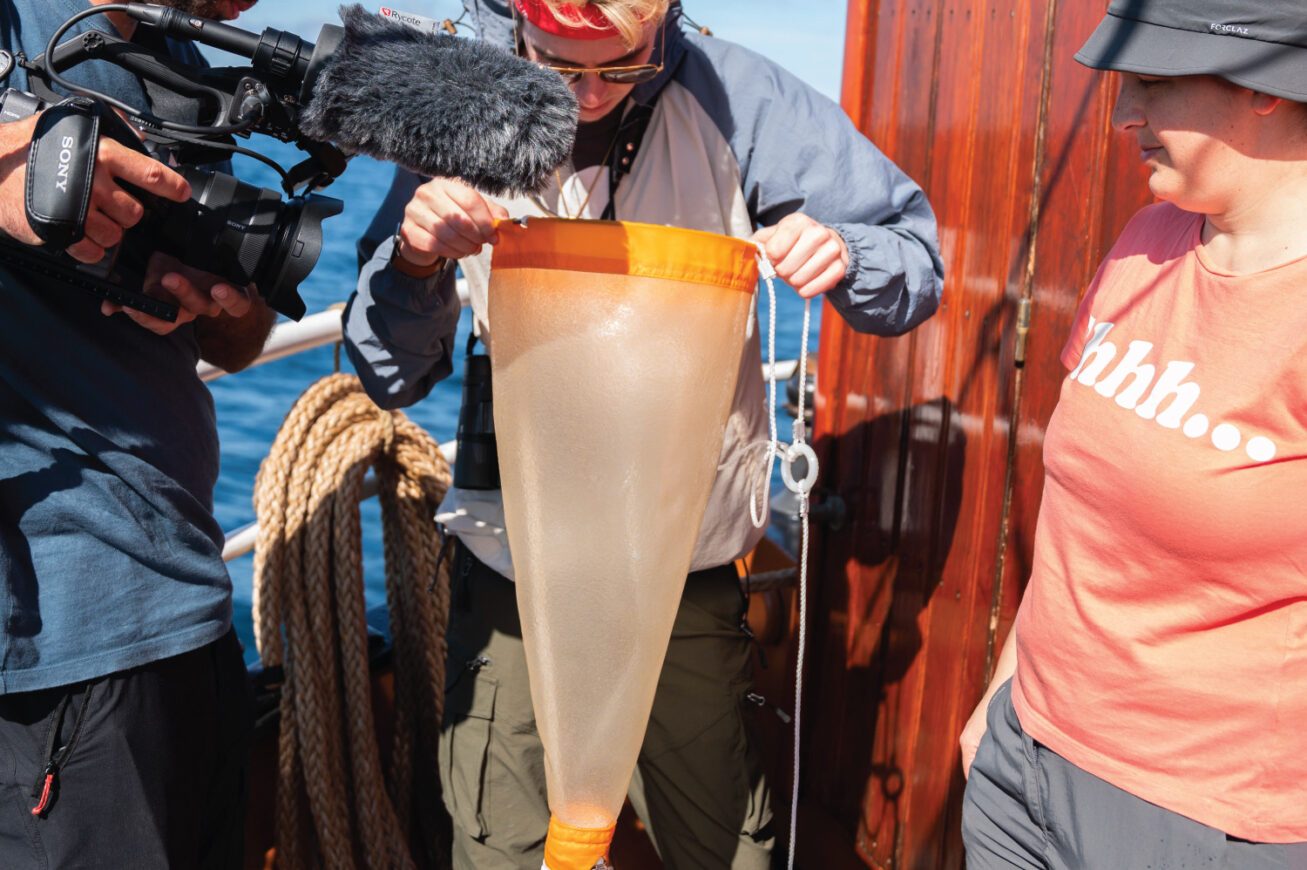
A trainee holding up a plankton net on deck while a camera operator films
Plankton net · 20 min towSST 16.4 °C · SAL 35.1

Measurements on board

Temperature, salinity, clarity

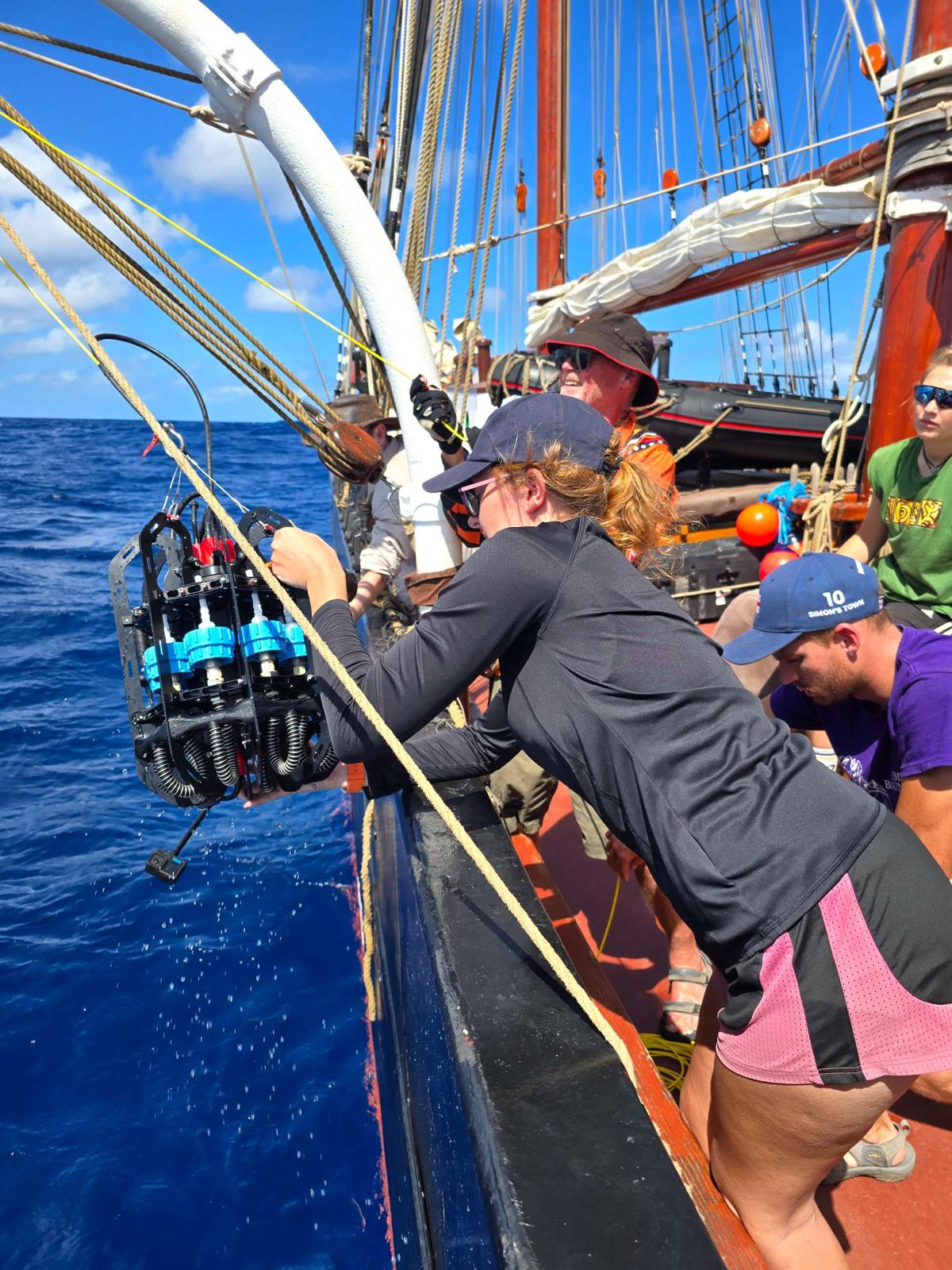
Sea-surface temperature and salinity with a calibrated probe, water clarity with a Secchi disk, pH with a meter, and plankton net tows. Ships working with research partners can deploy water samplers from the rail. Readings carry the ship's AIS position and UTC time automatically.

SST °C · SAL PSU · pH · SECCHI m · WIND Bft · CLOUD okta

48°N46°N6°W2°W
Leg 2 · 23 observationsAIS every 60 s

Voyage-linked data

Every observation on the map

Observations appear on the ship's live track in Tallshipchannel, next to its race legs and port calls. Scientists can filter by ship, season and area and export the data. Partner schools see new points arrive as the ship sails.

MMSI · UTC · LAT/LON · QC FLAG · EXPORT CSV / NetCDF

A scientist leans over the rail of a tall ship to lower a water sampler into the deep blue sea while crew watch
Water sampler over the rail© Stewart McPherson / DARWIN200

Proven at sea · Darwin200

A tall ship already sailed around the world as a floating classroom and laboratory.

From August 2023 to July 2025 the Dutch tall ship Oosterschelde followed the route of Darwin's HMS Beagle for the DARWIN200 voyage. Young conservationists sailed as "Darwin Leaders" and carried out research on ocean plastics, coral reef health and marine wildlife along the way, while schools around the world followed the ship live.

The Ocean Observatory builds on exactly this idea, and makes it available to every tall ship in the Tallshipchannel fleet on every voyage.

43,000+nautical miles, 32 voyage legs
106Darwin Leaders from 45+ countries
100+live broadcasts to schools

Sources: darwin200.com · UN Chronicle: The DARWIN200 Global Voyage

Ocean stories

Science at sea makes stories worth watching.

Every observation has a story behind it. Films like this one show what classrooms and audiences can experience when ocean research is shared from the water.

Guanches of the Sea – The Pilot Whales of Tenerife, episode 3 of 3, by Iro Tsarmpopoulou-Fokianou. Watch on YouTube ↗

“The ship brings the ocean. The classroom brings the questions.”

Ocean Observatory for Schools

A European Blue School needs a real ocean topic, a partner from the ocean world and results to share. A tall ship at sea gives a class all three, and makes the ocean feel close even for a school hundreds of kilometres inland.

A classroom with a large interactive screen
Class 6BShip-to-classroom call · 11:05 CEST

Ocean Observatory for Schools

A class adopts a ship and follows it across the ocean.

Schools adopt a tall ship for a voyage. The class follows its live track, sees every observation the trainees log, and talks to the crew. For schools in the Network of European Blue Schools, the voyage can become their Find the Blue project.

  • ✓
    Adopt a shipChoose a ship and voyage from the Ocean Observatory calendar. The class gets its own space in Tallshipchannel Communities.
  • ✓
    Classroom dashboardA big-screen view for the class: live position, speed and wind, the route ahead, and new observations as they arrive.
  • ✓
    Live ship-to-classroom callsScheduled video calls when the ship has connectivity, and recorded messages from the crew when it does not.
  • ✓
    Ask the crewStudents send questions to the ship. Trainees answer in their daily log, with photos and short videos from deck.
  • ✓
    Work with real dataDownload the voyage data for maths, biology and geography lessons, with ready-made lesson packs by age group.

Find the Blue, step by step

How a voyage covers the five Blue School criteria.

To become a European Blue School, a project must meet five compulsory criteria. The Ocean Observatory for Schools is designed so that one adopted voyage covers all of them, with Tallshipchannel acting as the ocean professional partner.

Blue School criterionHow the Ocean Observatory supports it
CRITERION 1Interlinked activitiesBefore departure: learn about the ship, the route and the species to expect. During the voyage: follow the track, analyse data, talk to the crew. After arrival: compare predictions with results.
CRITERION 2A clear outputA class voyage report, a data poster or map, or a short film made with the ship's footage, published in the class community.
CRITERION 3Involve all studentsEvery student takes a role: navigator following the track, biologist logging sightings, data analyst, reporter writing to the crew.
CRITERION 4Collaborate with a partnerTallshipchannel and the adopted ship act as the ocean partner, with live contact with trainees and crew at sea.
CRITERION 5Communicate resultsShare the project with parents, the ship and other schools through Tallshipchannel Communities, and submit the best stories to the Tallshipchannel Media Vault.

How the data travels

From the rail to the classroom to European ocean science.

  1. Observe on deckTrainees log a sighting, litter count or measurement in the Tallshipchannel app, offline if needed.
  2. Stamp and syncTallshipchannel adds MMSI, AIS position and UTC time and syncs when the ship is connected.
  3. Share with schoolsAdopting classes see the observation on their dashboard and can ask the crew about it.
  4. Contribute to scienceQuality-checked data is exported in open formats for EDITO and European marine data partners.

Ships. Schools. Ocean science.

Bring your ship or your school on board.

Ship operators can register a voyage for the Ocean Observatory. Teachers can adopt a ship for their Find the Blue project. Scientists and ocean organisations can join as data partners.